
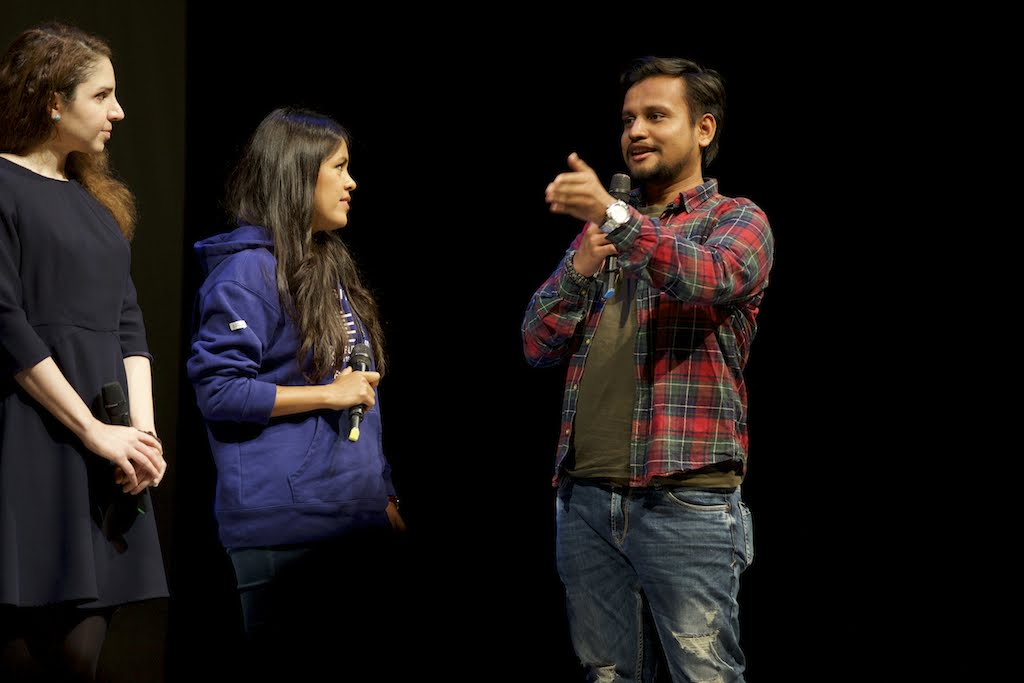
 I feel my self, eligible to answer this question as I am about to finish my Master soon in German taught Program. Currently writing my thesis in a reputed German firm. Trust me it’s not at all Hard to do Master in German taught Course if you are ready to take language as the medium of education rather than taking it as a hurdle between you and the master’s content. I did my bachelor study in India, in English taught course though being in Gujarat, we were using Hindi or Gujarati to make concepts of engineering clear, though all Exams need to be in English orally or Written. My schooling was done in my mother tongue Gujarati. Now from such a background, it seems difficult to study in a German taught-course, as we have never tried it before, so we try to avoid it. I started basic A1 classes in India and get A1 Certificate so it can help me getting visa acceptance easier. Then I did an intensive German language Course in Berlin. At that time my focus was only to get the required language certificate, so it was kind of full time only for the German language. In that way, I was able to get the Telc C1 and TestDaf in around 8–9 Months. ( You need only one of these, Goethe C2, Telc C1 Hochschule, TestDaF (4*4) or DSH 2) So as I began my study at HAW Hamburg being only Indian or you can say the only Foreigner, it was difficult to understand what’s going on around me. It’s not because of language it was the method of teaching which is a little bit difficult as an Indian to digest. Classes are having a duration of 1 hour 30 minutes and there will be 2 sessions per subject on its day. That means you learn at very rapid speed, so many things need to be done by yourself at home. Being at Hochschule you have to submit reports, perform experiments, and present the content of your work. No written exams for many subjects. This way you don’t need to mug up all the content if you can explain it in your broken German, that’s enough. No Negative markings if you make some grammatical mistakes. Grades will be based on your performance for those subjects, not your language skills. One thing one needs to work on technical words but if you take those technical terms as new words, rather than translating it to English. You understand the meaning in the German language itself would be better. Similarly, I have done it in my Bachelors, similar migration from mother-tongue schooling to English engineering universities. This will make things easier than all-time using unreliable translation apps or sites. HAW HAMBURG Erstsemester Begrüßung | International Students | HAW HAMBURG | Ankit Sheladiya | Now I didn’t find it hard presenting in German or also writing exams in German as I invested 9 months before and also language can be improved along the semester, so it will always improve assuming being in Germany. The benefits of studying in German-taught courses can be seen while finding internships and jobs. As most of the management level or HR head are native and they require at least a basic understanding of the German language. Here you will get the advantage of all other applicants as your fluency level will be higher and you can express your skills better. Summary: It’s not hard at all but needs to work on language. It will also open a big rich job market for you in Germany as well as in the world. For Master 3 semester is not that Hard, I have seen many who did their bachelors also in German taught, so it’s doable from every aspect if you are open to a widely growing language without being afraid of its difficulty level. All the best #Edit1 I finished my master degree in automotive engineering (M.Sc Fahrzeugbau) in August 2019 and started working from 1st November 2019 with a leading engineering services provider in Germany. If I can finish a course in German taught program, I don't think it's impossible for others.  Student doing Part-time jobs in Germany Student doing Part-time jobs in Germany Is it possible? Yes is it easy? No According to German laws, Students can work 20 hours per week and 120 full or 240 half days in a year. So the average basic salary is around 9 to 11 Euro per hour. The minimum salary is somewhere between 9 & 10 € (In 2020 it’s 9.35€) per hour, you can not get below this amount if you are working legally. This is the general criteria you will have to follow during your part-time work. Per day maximum working hour is 8, it can go till 10 but more than that is not allowed for anyone not even for German employee. Two extra hours is also complex, some say it will be counted as extra day so you may lose 1 day from your 120 days by working 2 hours extra, but I am not sure on this topic. Not following these rules might get you a penalty from German authorities, only in the extreme conditions like working more than 150 Full days or more.
Now reality is it’s impossible to utilize those 120 days if your primary goal is education and also you want to score well in your exams, but you can start with the initial blocked amount in your bank account and try to maintain this balance around 4–5000 €, here you can work during semester break full time and earn some good money and during semester just earn to fulfil major expense such as rent and insurance, you can do a mini job (450 €). This will be the optimum approach as per my advice. Getting a good job without good german skills is not an easy task, you will end up doing a labour job where language skills are not required. Another factor is the city where you live, bigger cities offer more job opportunities. Some people can also find the job at the university itself, but not everyone can find it, as the numbers of such jobs are also limited. Another thing I would like to explain is the greediness of earning money. As once you become greedy, you will do more and more part-time job, as once you start with any kind of job, the job provider will always have a shortage of people, and you are the cheapest manpower for them, they will always send you for work, and per day on an average you get around 70–80 Euro for full shift, and some students work kind of full time by not going to universities and spending more time to earn more and more money at the cost of education and grades. If one calculates this whole thing with the vision you are just sending your full-time salary one or two-semester away. As early as you finish your study there is a high chance of getting the amount of money you earned by doing the part-time job for one-two semester in just two months. So keep your vision and priority in your mind. Just don’t look at the short benefits of earning 80 Euro in a day. I have managed successfully my finance with this strategy, I had advantages of living in Big cities like Berlin, Hamburg and now Hannover so things worked out for me very well. As I did my Course in German taught Programme so language was never a barrier for me, as I was able to work without any limitations. So if you are good at communications (English and German) and not a lazy person you will most probably survive with student job during your study. Other factors have influences but it can be overcome by efforts and little bit discomfort and optimum level of luxury. Good luck! You can also watch the animated explainer video for this question in this video. Thanks.  I like to answer this kind of questions as the person who asked it want a binary answer either yes or no. But in reality, it’s not always like that, it depends on so many factors including the person itself. I will try to break down the thinking scenario to make it easier for readers to prepare them self for their adventure in Germany. The first thing to clear: What is a student job?
The second thing: the German language?
Conclusion: it’s possible for sure, but it won’t be always easy to find. As Germany seems small on the map but you will be in different cities where different industries would be situated and they will have different requirements for their student employees. So you can’t get the binary answer in yes or no. It depends on factors such as:
Knowing German in Germany makes things easier for you. As you will be in a position to discuss and argue in case of any conflict situation. There are many students who are in their learning phase with the German language, but they still managed to get part-time student jobs in their respective localities. In the end, your inner Jugaadu soul will lead you in case of trouble to find student jobs.  Short Answer: No, It’s not enough. Long Answer: Not enough at all, even if you are going to study in English taught course, the thing which you will learn on Duolingo will help you to know the basic grammar and basic day to day conversations. By basic, it’s really pretty basic. Like I am eating an apple and he is eating an apple kind of stuff, so if you won't do any other thing to learn the language and only use Duolingo, you can say only these kind of basic sentences which according to CEFR would fall under A1 and in some advanced Duolingo levels A2, more than that Duolingo can not offer at the moment. I am Duolingo Global ambassador for 2 years, there are some promising features like Duolingo Stories, Duolingo Podcast and Duolingo events which can be used to fulfill the gap. You can connect with me and learn a language for free over Duolingo. 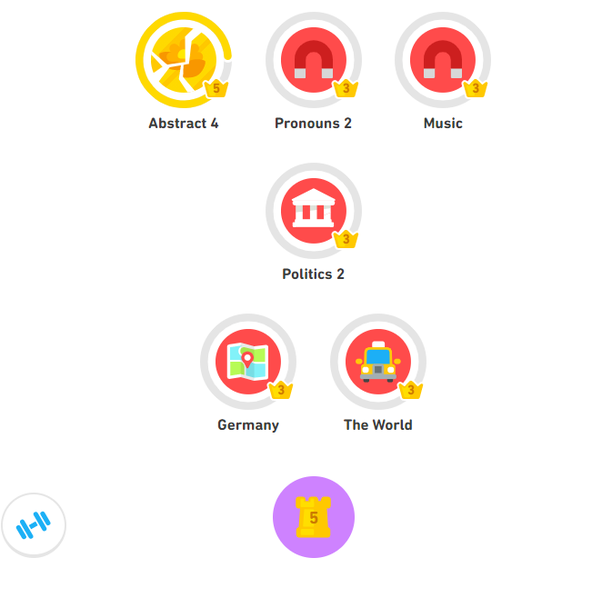 I have completed the complete 5 levels/ checkpoints offered on Duolingo when I was learning the language, they have updated them now. I was also attending the physical class, Duolingo for me was kind of addition to my language learning, but it was never a substitute for a full-time teaching or former teaching options. Even to communicate with a native person would need a proper environment and a little bit of practice, which is not possible at the moment with Duolingo. You can find a Duolingo Event group where you can practice with other Duolingo users. Listen to some podcast to get familiar with the german culture and some common practices by the natives, which are also important aspects of learning any language. Use Duolingo as a tool to enhance your learning experience, but it won’t be enough on its own to use it in real-world out there, for that, you need some more resources like books, online materials, etc for your MS in Germany for English teaching course. For German taught courses there is no substitute other than learning professionally up to C1 level and appear for the required exams to get the proof of your required language proficiency. Thanks. Ankit Sheladiya What is XING?  I am pretty sure you know already about LinkedIn, which is professional networking site. Main purpose of LinkedIn is to connect with like-minded professionals and make your network strong in any particular field. You can also use it find new jobs and share your field knowledge and insights with your network or learn something new about interest using groups. Coming back to Xing. It does the same work as Linkedin and it's more popular in German speaking countries or in other words under DACH region. DACH consist of Germany, Austria and Switzerland. LinkedIn is the international networking tool, which allows you to make global connections around the world. On the other hand XING is more limited in DACH region basically German speaking countries. Xing is still popular business platform in Germany, but Linkedin ist getting popular day by day. In Austria and Switzerland is Linkedin is slowly taking over Xing. How to make most out of Xing?You are reading this, that means you are in DACH region. Either working professionally or looking for some opportunities here. That's why you are interested in knowing about Xing. Xing has majority of experienced professionals with higher positions in their firms. As it's German equivalent to LinkedIn, it also works same as LinkedIn, you can create your profile on Xing, follow the businesses of your Interest. Take part in any group discussions, post your ideas and content for other people and businesses to make your presence in this professional network. As of now there are more than 18M registered professional in DACH region over XING.  As you know about LinkedIn premium, you can also get some insights and statistics about your profile with Xing premium. You can update your profile with your skills and language,etc with your work and education to be visible to the recruiters. It's all about showing off your skills over such professional networking platform. By keeping your profile updated can bring you new opportunities as most of the recruiters depends on Xing and LinkedIn for their recruiting and it is also nice to have someone experienced in your network, so you can learn from them.
Main thing to observe that Xing or LinkedIn is not Facebook, so you shouldn't use it like it. It's professional networking platform, so you have to use it wisely. Use proper profile photos, don't pose rubbish internet junk on your profile, put your details responsibly. Make suitable connections, follow companies you admire, rest your network will work for you, and it will bring some new opportunities for you. All the best. Happy Networking. -Ankit Sheladiya  From the notification shared by German Mission in India for the People having permanent residency in Germany, and can not travel back to Germany due to lock down situation and travel bans. These are the official information shared to help you out in this pandemic situation.
Below is an update (23.04) focusing on non-Germans with permanent residency in Germany (Source: https://india.diplo.de/) “Now that our repatriation program is nearing its last phase, quite a number of Indian citizens with permanent residency, work permit, Blue Card or student visa for Germany have approached us to see if we could help them return to Germany. I have a lot of sympathy for these concerns, and understand very well the difficult situation this is causing for many of you. But it is also important to be realistic and transparent in what ‘Team India’ (Embassy and our 4 General Consulates) can do for you in this situation. 1. The target group for the one-time repatriation program was those most vulnerable in such a situation: tourists and short-time travellers (as well as people with serious illnesses), those dependent on (closing) hotels and restaurants, without a support network of family and friends in India. Hence all other Germans (or people with residence permit in Germany) residing in India or with family ties in India were not part of this target group. This also includes many Germans for whom this international travel ban has caused quite some economic, educational or personal losses. Negative repercussions of this global crisis are unprecedented and are hitting us all. 2. There is a countrywide lock down in India (and many other countries) and the fight against the corona virus necessitates that all of us to respect curfews and travel restrictions. In many cases, there will be no other option than preparing to stay safe and remain where you are until regular travel becomes possible again. 3. There still are occasional specially chartered repatriation flights by some European airlines, which can be booked online. But please be aware that due to their non-commercial nature, relief-flight restrictions by the airline or by Indian aviation authorities might apply on who can board such flights! 4. In case you get on such a flight please be aware that once you fly to Germany you will have to undergo home quarantine for two weeks. 5. As for visa, work or student issues, it might be a good idea to contact your employer, university, landlord, etc., in order to see how to prepare for the days when commercial flights reopen again. You can be sure that there will be many cases like yours where people are stuck and can’t return to their destinations. We’re all in this together. This pandemic, in many aspects, has entered uncharted territory, so it requires flexibility and patience, but most of all, understanding that our main priority must be to fight the virus as efficiently as possible. I wish you and your family all the best. Please stay well and safe, and I hope to meet many of you in less tense times – either in Germany or in India!” Share this information to the people who needs it. Thanks.
Are you looking for tips and methods to improve your speaking in German language? Normally speaking can be improved over the period of time being in the environment where the language is being spoken. It is a fact one can learn speaking by hearing the sound...as we all know that deaf born baby is not able to speak anything even though his speaking organs are fine. There are number of other factors which can help you to reach fluency in the speaking in German. Your background and your practice and method are the biggest one.
Here I will share the learning tips which helped me during my journey until now. Follow if something you can try for yourself if it helps you in your fluency. 1. Play DAMSHARAS
I know it sounds weird, but it's impossible at the beginning of your learning a new language phase that you know every single word, so in that crucial time you can use gestures and body language to convey your message. Sometimes you have a hint of the word, but not able to remember it completely, associating it with the gestures you will be able to use the purest form of communication. In another way, during this communication method, the receiver can give you the word for the thing you were trying to say with the gestures and body language.
I will share my experience of being alone in Russia for the first time in my life at the age of 18, I had no clue about the Russian language. I was waiting at Saratov train station for someone to pick me up, but after waiting for 2-3 hours, I was so tired due to travelling since 3 days from Surat to Saratov via Delhi and Moscow. I decided to book a room so I can rest until this miscommunication can be solved. I went to the stations guest house, I could only say Hello and the lady over there could not speak any English. I was showing with my hand 1 room for me. I showed her my ticket from Moscow to Saratov. She was replying back with her hand one or two, I insisted one again and again. But later she showed me the room one was private and two was for sharing and she showed the price on her phone (Nokia Phone) for both rooms. This way I was able to find myself a room for that night without speaking Russian language and no chance of having internet on my phone in 2013 on my first day in Russia. After that, I got the WIFI and contacted the responsible person about my stay and the problem was solved. That was my AIESEC Exchange Programm in Saratov. 2. Get the environment
The best way to grab the fluency is by being in the environment of that particular language. That would be by moving into a German-speaking country like Germany, if possible or else making some native friends of that language. Even I have seen many people from foreign students are always in their country groups, even after staying in Germany for many years. It's good to be with your countrymen but if you have goals of speaking the language fluently you should also have more native friends, it helps not only in learning the language but also you get familiar with the culture.
I have been living in German-speaking houses since my first day in Germany, In Berlin, I was living with a German guest family where I had my full time talking session all day from breakfast to evening tea, which made me or forced me to speak in the German language. Even after that, I have always found a WG(Shared Apartments) with German speakers throughout my journey in Germany since December 2015, excluding a few months where I was living in non-German WGs. Sometimes it is not possible for people with a family to have experiences like me, they can find some Facebook Groups for German speakers or some useful sites Like Meetup Duolingo Events and other for language exchange meetups near you. You can find some tandem partner to practice your language, there are many such apps available on play stores. Italki is one of them. Even I am also offering speaking sessions due to this lockdown situation. You can get information on M4dspeaks Facebook page.  Germany is getting popular for higher studies in whole world due to it's quality education and low tuition fees. Apart from that students are allowed to work 120 half and 240 full days in a year to finance their studies. There is an arrangements known as block account where every international students need to deposit funds needed to deposit to ensure the survival and costs of living in Germany. As the corona crisis is getting over the world, and Germany at the moment. Many cafes, Restaurant, Theaters and shops are fully or partially closed due to this lock down situation. There are not enough jobs this students can do at the moment. Many students are depended on this part time job to finance their study. More than half of the students are depended on this income. This situation creates a major financial problems as most of them are into temporary jobs and they do not get any financial security during such crisis. There are demands from the local university student political groups to look into this matter and provide some sort of emergency funds to the needy one in crisis like this. The students can not even fly to their parents due to lock down situation in almost many countries. I am being a former student from India, I can speak of many students who are facing such issues and can not ask for funds from their parents and now here they can not make up for the fund needed to pay their rent and other needed expenses. This is the story of the students from countries like eastern Europe, Asia, Africa and Latin America. Students with weak financial situation are under stress and worried about their survivals.  Emergency funds from DAAD and Studentenwerk Thankfully German authorities have planned emergency funds for the students in financial crisis. This information can be seen from the university and Studentenwerk websites. Normally students can apply it for 2-3 times maximum, and which is the emergency fund which does not needed to be returned but it's only in case of real emergency. There are information about the German Academic Exchange Service (DAAD) about helping international students in the crisis. I have attached the link below about the emergency funds from my university HAW Hamburg and I am pretty sure about such funds and arrangements in each German universities. In case of any emergency financial situation one can always contact the international office and seek the needed the help. Indian students in Germany As of now most universities have postponed their sommer semester and some has started their semester with online classes only. If any Indian students are facing trouble at the moment they can contact the above methods common to the all international students. Apart from that there are Indian associations in most of the cities and universities which are kept in constant contact with Indian embassy. They can surely give you ear or try to help you out in appropriate manner. Please follow the official Information from the authorities and avoid panic and stay safe.  Corona or Covid-19 outbreak is there since the December last year, the spread was started in Wuhan and as of now is affecting 163 countries and territories around the world including a cruise ship harboured in Yokohama, Japan. This is the high time when the whole world needs to think more than the stocking toilet papers. The virus itself is not that harmful, but the panic and stupidity of many people are. It's the time when we need to support the steps suggested by scientists and the government to control the spread with the target in mind to eliminate it. We all should be stop complaining about the travel restrictions and some other nominal issues for the god's sake.
The whole world is in the fight against covid-19 (Corona Virus), which is spreading throughout the globe exponentially. It's not the individual diseases as it is affecting the whole system, let it be a financial system, medical system, even out social system. This virus has the incubation period from 1-14 days as per the WHO, even after that Symptoms are mild in most of the cases. Even without noticing any symptoms one can infect other people in close contact circle. Older people and people with existing sickness and low immunity mainly related to lungs and breathing issues are at higher risk. Young people can fight back the virus with good immunity, to say the virus itself is not that fatal, but it's highly infectious. if we see the figures in Italy the number of infected cases increased drastically, from 157 on 23rd Feb 2020 to 31,506 on 17th March on the day of writing this post. In less than 3 weeks the numbers went from a hundred to thousands. This creates the problems with the resource allocation and now the doctors in Italy need to decide to save the patient as per the chances of survival, by letting the old and low immunity people dying or leaving them on God's hand. You are an international student planning to join your university in Germany in the Sommer semester 2020, which normally starts on March 2020 to April 2020. People who are already in Germany they know the situation better, but the people who are still in their Home country must be definitely sceptical about their flying to Germany, as the situation is changing on an hourly basis. If we see the number of infected people all over the world, Germany is on the 6th rank having more than 3000 confirmed cases, having 46 persons recovered and 7 losses till now. And the situation is uncertain as the growth in the number of infected is rising exponentially. Apart from panic buying of toilet papers and other canned food in the supermarket, and spreading fake information on social media, there are no strict isolation or lockdown has not been implemented yet.  Now what does it mean for Incoming students  Germany hasn't closed its border until now, so people can still travel to Germany. People who were travelling or were in highly infected countries (Italy, China, Korea, France) are being asked to observe a 14-day quarantine to avoid the infection being spread. If does that mean you have to miss your studies or exam you can present a formal document to university. Latest highly infected areas can be found on the Robert Koch Institute website. It is advised to be informed about the latest travel information for Germany on the German embassy website. According to Robert Koch institute "The risk to the health of the population in Germany is currently assessed as moderate overall. However, this risk varies from region to region and is high in "particularly affected areas". The probability of serious disease progression increases with advancing age and in the case of pre-existing conditions. The burden on the health care system depends largely on the regional spread of the infection, the available capacities and the countermeasures are taken (isolation, quarantine, social distancing) and can be very high locally. This assessment may change in the short term as a result of new findings". So if you fall under the suspected case of Coronavirus, you will be monitored by the responsible authorities upon arrival in Germany. It can be any means of entering in Germany. The best thing would be to consult the university international office about the latest status related to Corona Epidemie. The most university website has sent emails to inform as well as posted on the Home page of their websites. The universities which didn't begin yet, have postponed the semester start one month later, some universities which had earlier start are waiting for the official confirmation from state authorities, but you are not obliged to attend the universities and are advised to avoid the gatherings as well as take care of your hygiene. Virtual format of learning and meeting are proposed whenever possible. For the International students or students who will soon be coming to Germany to study should enquire directly at their university about the current situation at their university location as per the advice from DAAD. Preventative measures: (recommended by the Federal Centre for Health Education)
Below I have listed some trusted resources and some university websites from different regions in Germany, It would be helpful to take the decision. It's strongly advised if it's avoidable than don't travel for the time being. At this time one can hope for the best response from the government and the society together to fight back the coronavirus. 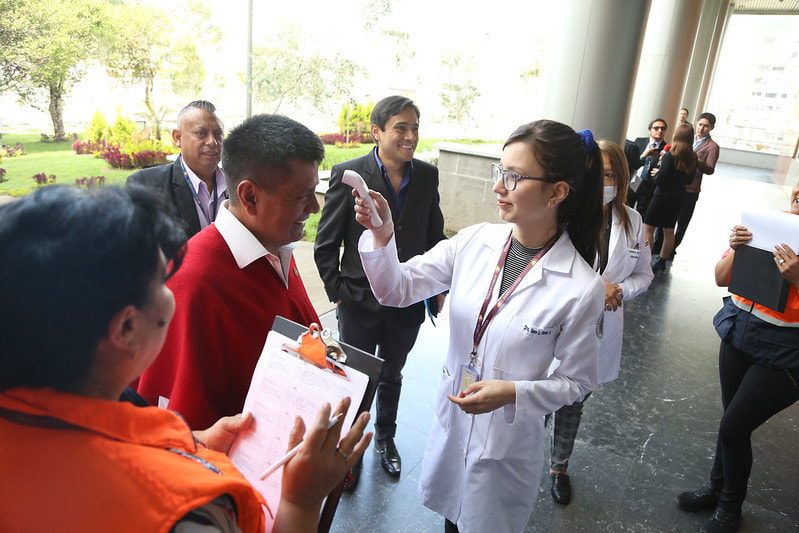 More Information on Corona...
|
Ankit
|


 RSS Feed
